

Purification of a complex mixture
by eliminating the pollutants or specifically extracting a target molecule.

Ion exchange is an extremely robust and adaptable technique allowing the extraction from a liquid of a charged molecule, which is then exchanged for an ion initially bound to the resin. This is the most widely used process for producing sugars of all origins. Once a resin is saturated, it must be regenerated by the application of salt, an acid, or a base depending on its purpose.
Adsorption refers to the ability of certain materials to make molecules adhere to their surface, more or less reversibly. The substrates used (resins) have a porous structure, giving them a very large specific surface area. Once the resin is saturated, the adhering molecules are eluted by applying a suitable solvent, in some cases a simple sodium solution.
Chromatography makes it possible to separate the molecules in a mixture, according to their affinities with the resin used. Differences in affinity are reflected in different velocities of displacement through a resin bed: this difference in velocity is used to continuously separate the slow constituents from the fast constituents, without the need to use chemicals or a solvent to regenerate the resin.
Size exclusion
Based on the size of the molecules to be eliminated
Example: Glucose / Saccharides DP>2
Affinity
Based on the formation of complexes
Example: Glucose / Fructose
Ion exchange
Based on the charge of the molecules to be purified
Example: Separation of Sugars / Salts
Acid retardation
Based on ionization and solvation differences between acids and salts
Example: Purification / separation of organic acids
Resin applications were originally developed to treat water, but have spread very widely in industry for the extraction and purification of a wide variety of products.
demineralization of many food ingredients (sugars, specialty sugars, glucose, whey, gelatin, etc.).
biomass valorization (purification of C5 and C6), production of bio-based molecules (organic acids, amino acids…).
Direct Lithium Extraction (DLE)
Lithium purification / refining (battery-grade LiOH),
Battery purification / recycling (black mass/ NMC processing)
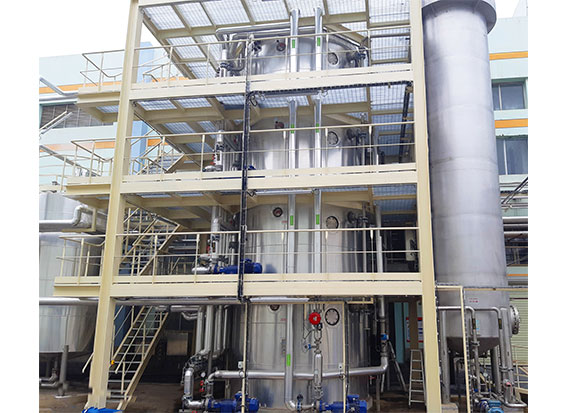
Food industry:
– Affinity chromatography makes it possible to separate different saccharides and polyols: fructose and dextrose, mannitol and sorbitol, dextrose and galactose, mannose, and dextrose.
– Size exclusion chromatography and ion-exchange resins are used to separate sucrose from fructose and dextrose in the starch & specialty sugars industries and to separate lactose, salts, and non-protein nitrogen in the dairy industry.
– Adsorption chromatography separates organic acids into salts, colors, and sugars.
Bio-based chemistry: size exclusion chromatography and ion-exchange resins are used to separate dextrose or maltose from molecules with a high degree of polymerization (sucrose, amino acids, salts). The principle of acid retardation is used for the extraction and purification of many low-pH organic acids, which in their molecular form are retained by the resin.
Generic advantages
Advantages of Eurodia ion exchange and adsorption
Mastery: acquired through experience, and coupled with a strong understanding of industrial processes, this has enabled us to develop a specific approach aimed at limiting, and even eliminating, the production of effluent.
Limited water consumption, due to the special care taken in designing our ion-exchange columns.
The resin best suited to each of our customers, which we can identify and propose through a constant dialogue with the manufacturers.
Production of exclusive resins, which our work leads to in some cases, such as for whey demineralization.
An original process based on a combination of technologies (membrane filtration, electrodialysis, ion exchange, adsorption) to produce second-generation sugars.
Generic advantages
Advantages of Eurodia chromatography
Our patented continuous-production technologies deliver the highest performance and are the best suited to industrial purification for separating two, three, or more components.
Specific column and distributor design: this allows the use of the smallest resins (200-220 microns), giving the best separation resolution and total control over fluids distribution.
These build offers several advantages: eluent savings, high productivity, excellent separation quality.